Rewriting the Money Story: Healing Financial Frustration and Reclaiming Creativity in Business
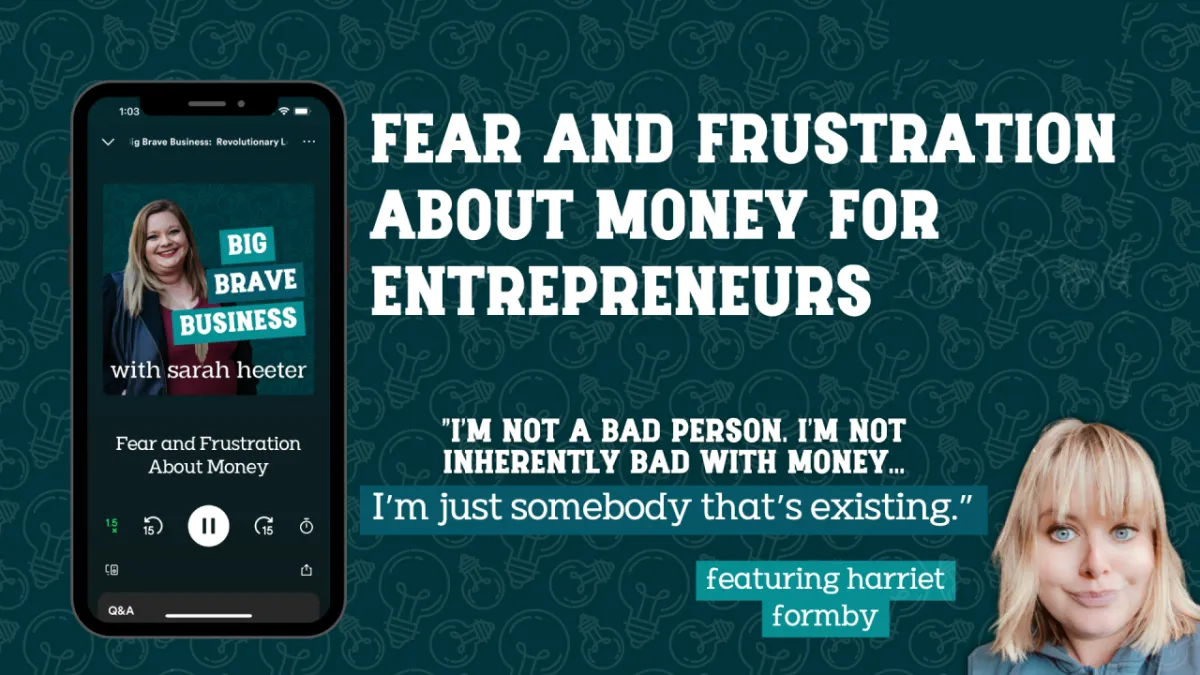
When I sat down with Harriet Formby—Fractional CFO, ICAEW Chartered Accountant, and Trauma of Money™ Certified Practitioner—I knew it was going to be an important conversation. But I didn’t expect just how personally it would land. We talked about financial fear, creative entrepreneurship, and why so many of us carry unexamined shame around money, even when we’re running purpose-driven, successful businesses.
This episode isn’t about fixing your finances overnight. It’s about healing the relationship behind them. Harriet brings both deep expertise and incredible compassion to the conversation—and I brought my own very real money story to the table, too.
Unpacking Financial Fear in Entrepreneurship
“I want money—but I’m also afraid of it.”
That’s something I’ve said out loud before, and it still feels vulnerable to name. As an entrepreneur, I’ve had to confront just how complex my relationship with money really is—especially compared to when I had a salaried job.
Harriet put words to something I’ve felt but hadn’t fully articulated: we’re all carrying conditioning around money that doesn’t serve us. “Everything we know about money,” she said, “comes from upbringing, culture, and a capitalist system that’s not designed with our emotional wellbeing in mind.”
She’s right. And when we step into business ownership, we’re suddenly responsible for so much—paying ourselves, paying others, making sales, managing expenses—and it can feel completely overwhelming. It’s no wonder fear shows up.
The Trap of Financial Comparison
I’ve definitely found myself comparing my financial progress to other people’s—especially in the early stages of my business. Harriet shared how that showed up for her, too: “I looked around and thought, maybe I should be further along. Maybe I’m behind.”
That hit home for me. It’s one of the most frustrating parts of growing a business with integrity. You want to move fast, but you don’t want to compromise your values or your wellbeing to get there. And sometimes that means feeling like you’re not doing enough—even when you absolutely are.
In our conversation, we named the emotional toll of those thoughts. And we also reclaimed the truth: there’s no timeline but your own.
The Shame Behind the Numbers
Here’s something I admitted during the episode: despite making more money than I ever did in a traditional job, I sometimes feel like I can’t be trusted with it.
I’ve noticed patterns—like spending what I earn, even when I’m proud of how I manage expenses. I’ve also realized I have a deep aversion to managing money. I don’t want to budget, I don’t want to do bookkeeping, and I definitely don’t want to handle taxes. I’ve said (only half-joking) that I want a financial babysitter.
Harriet met that honesty with so much compassion. She reminded me that the discomfort isn’t about laziness or incompetence—it’s about the emotional weight that comes with money. “If you’re not used to holding money,” she said, “your subconscious will find ways to let it go.”
That perspective changed everything for me.
Letting Creativity and Finance Coexist
This was one of my favorite parts of the conversation. Harriet and I both have experienced the false narrative that you’re either good with money or you’re creative—but not both.
I’ve felt this tension for most of my life. I’ve always identified as a creative person. And for a long time, that came with the belief that I wasn’t supposed to want money, let alone make a lot of it.
Harriet called out how early this belief starts—how kids are sorted into “math people” or “art people,” and how that division keeps us from seeing how interconnected creativity and business really are. “The value of the creative economy is huge,” she said. “There’s no reason we can’t be both.”
It reminded me that money doesn’t have to stifle creativity. It can fuel it. And that’s a shift I want to keep embracing.
Permission to Invest (Even When It’s Scary)
Both Harriet and I shared stories of making big investments that didn’t “make sense” on paper—but felt deeply aligned.
For Harriet, it was joining a program she hadn’t budgeted for yet—but knew would move her closer to her goals. For me, it was investing $15,000 in a 1:1 coaching relationship that felt like jumping off a cliff—with a parachute. I didn’t know where the money was going to come from. But I found a way. And I made that investment back, directly and indirectly, through new client work and referrals.
We both agreed: sometimes being brave with money means trusting your instincts—and being clear about what you’re hoping that investment will unlock for you.
Finding Your Own Brave Money Path
One of the most powerful things Harriet said in our conversation was this:
“You’ve done the best you can to get where you are now. That’s pretty epic.”
That landed so deeply for me. Because it’s true. Even if I still have patterns I’m working through—even if I avoid spreadsheets or have shame around my habits—those patterns helped me survive. They helped me build this business.
Now, it’s about consciously choosing what I want to carry forward—and what I’m ready to rewrite.
Harriet encouraged listeners to start with emotional clarity, not just strategy. Journal. Reflect. Understand your beliefs. Then build a financial plan that actually feels aligned—not one based on rules that don’t serve you.
As for me? I’m still in this work. Still learning. Still getting braver. But after this conversation, I’m feeling more grounded than ever.
Key Takeaways
Money fear in entrepreneurship often stems from conditioning, not a lack of skill.
Shame, avoidance, and self-doubt are normal responses to financial pressure.
Creatives can and should make money—and money can fuel creativity.
Strategic investments don’t always feel “safe,” but alignment matters more than perfection.
Financial healing starts with understanding your money story—and building from there.
“You are existing within a system that’s often not in your favor. But everything you’ve done has gotten you here—and that’s pretty epic.” — Harriet Formby
About Harriet Formby
Harriet Formby is a Fractional CFO, ICAEW Chartered Accountant, Trauma of Money™ Certified Practitioner, and Business Mentor behind @belowthelinefinance and @getnumbersavvy. Based in the lush countryside in the United Kingdom, she is dedicated to empowering conscious business owners to transform their purpose-driven journey into a financial success story through Fractional CFO services, training, consultancy and mentorships that help us reimagine capitalism for a more compassionate world.
Connect with Harriet:

Produced by Podfox Media

Be My Guest!

Get our emails
Stay up to date when there are new episodes, resources, or opportunities for connection and business growth.